Saturday, 21 November 2015

PEGAMINA PART FOUR


PEGAMINA
By BARRY VAN-ASTEN
 
PART FOUR
 
THE SAD LITTLE GHOST

As Pegamina walked beside the winding river in the twilight, she thought about what the toad had said about the miller’s boy and his poor grandfather, the time keeper. Suddenly the air seemed to grow cold and it began to rain as she quickly crossed the bridge that was almost hidden by willow trees. In the distance, she could see the top of the clock tower rising above a small clump of trees which lay in a hollow, not far away, and as she began to run towards it, the rain ran down her face. A blustering wind seemed to appear from nowhere, and all along the dark lane she imagined that she could see things moving in the hedgerows. Faster and faster she ran until she came to the old time mill with its clock tower which seemed even more desolate in the darkness. And at each side of her the trees seemed to whisper: ‘go back!’ but Pegamina was tired and wet and wanted to rest and sleep until morning and forget the darkness that was all around her.
She found herself standing in the entrance to the mill, looking about her, at the shadows in the trees and at the black clouds descending over the ghastly garden that had been forgotten and run to weeds. As she stood for quite a while listening to the rain and the wind howling, she thought: ‘surely no ghost could be more frightening?’
The door was unlocked and she pushed it open, as its creak echoed down the dim, uneven passageway which lay like an open grave before her. Finding courage, she went inside and opened the door to the first room she came to. It was an old and elegant room, smelling of the past, and through its windows she could see the shapes of huddled trees that seemed to claw against the glass. Even in the darkness she some of its fine furniture and dusty heirlooms; there was a large bookcase full of rotten books; a cabinet containing a small collection of unusual objects. And a few upholstered armchairs, very worn and very tattered, lying like a herd of some long extinct species of animal around a table on which stood a carved wooden bust of a woman’s head, and more books, balancing precariously here and toppled into a heap upon the floor there. To her surprise there was a small fire lit in the fireplace and so she stood before it, drying her wet hair and giving no thought as to why the fire was alight. When she was dry she sat down upon the armchair, near to the fire and fell fast asleep to the sound of the rain on the window panes.
During the night, she found herself in that curious and helpless state between sleeping and waking, where nothing is as it seems and she could not remember where she was or how she got there. She looked at the faint glow of the fire and all around the room until it all came slowly back to her. The rain had stopped and in its place she thought she could hear the sound of someone singing. As she listened, it seemed to grow louder until she could make out the words of the song. It was a very sad melody sung by a very tearful voice:
 
‘Spider, spider, spinning tight
Threads of fury through the night!
In its black and gathered eye:
The destruction of the fly!
A silken web that shows to me
The spider’s fearful symmetry,
That fills my heart with so much dread
To see eight legs and a head
Spin so much and hear it spin
Strange and weird cathedrals in
The darkness where it’s fancy wills
Great monuments of archway frills!
Spider, spider, spinning tight
Threads of fury through the night!’

Pegamina was afraid, but not so afraid that she wanted to scream, just hide herself away in the darkness and not be seen. But there was something about the voice that seemed to say ‘don’t be afraid, I will not harm you!’ And Pegamina sat still in the armchair, expecting the door to fling open and reveal some headless monstrosity or a woman in white, wailing into the cheerless room. But nothing did appear and the voice had faded away. Peg curled herself up into the armchair once more and very soon she was asleep again.
She dreamt that she was walking through vast woodland. It was dark except for a bright light that she was following and seemed to be leading her somewhere. Suddenly, the fiery orb halted in front of a great stone temple and its bright light lit up the temple’s entrance, where, above its huge door she could see strange words cut into the stone, which read as follows:

tu stesso, ti fai grosso
col falso immaginar, sic he non vedi
cio che vedresti, se l’avessi scosso *

Pegamina did not know what it meant, or even how it was meant to be pronounced, but she thought it must be very important for it to be carved into stone. Then, all of a sudden, it went very dark, darker than she had ever known before; the light had left and she had to find her own way out of the woods. She was terribly afraid and she could feel all the hanging branches brushing against her face. Then, she awoke, suddenly with a start, and she could feel her heart pounding, for there, standing before her, drawing its hand from her face, was a small boy. Pegamina knew she was not dreaming, for she could see him, although his image was a little unclear. She opened her mouth as if to scream but nothing would come out.
‘Don’t be alarmed, I didn’t wish to wake you’ whispered the ghostly boy in a gentle voice, stepping away from her.
‘Who are you?’ Pegamina managed to utter after recovering her speech.
‘You know who I am! I’ve been expecting you!’ the boy answered with a smile.
‘You’re the time-keeper’s boy aren’t you?’
‘I was!’
‘But you’re...’
‘Dead?’ said the boy, finishing Peg’s sentence for her.
‘Yes’.
‘I am dead!’
‘Then you’re a ghost?’
‘It appears so’.
‘But you touched my face; everyone knows that ghosts can’t touch’.
‘Of course ghosts can touch, but ghosts can’t feel things’. And they both looked at each other in silence for a short time until Pegamina said:
‘Why were you watching me?’
‘Forgive me! I was watching you because I had forgotten what it is like to sleep’. And the boy moved towards the fireplace where he sat upon a small stool that had been occupied by Peg’s shoes, which he carefully placed upon the shelf beside the fire.
Pegamina could see that the boy was about her own age and seemed awfully sad. And when he looked at her, she turned her face away, not through fear, but because he was so terribly handsome, she thought, even for a ghost! And she did not wish him to see her blushing! As they sat there, each glancing at the other, Peg asked the ghostly boy if it was him she had heard singing that sorrowful song about the spider.
‘That was me! You have no idea what a wretched place this is; to be here forever with its constant scratching behind walls. This house haunts me more than I haunt this house! With its infernal loneliness and the sunlight that pours through the windows!
‘Don’t you like the sun?’ asked Peg.
‘I hate the sun! It always finds you out; nothing can hide when it shines!’
‘But the sun is warm and it makes things grow!’
‘It makes only loneliness grow!’ said the little ghost. And after a brief pause Pegamina said:
‘I don’t like the darkness!’
‘But the darkness is beautiful; things remain unseen in the dark’ the ghost said, his bright eyes staring deeply into Pegamina’s.
‘If things want to remain unseen’ said Peg ‘then they can’t be very nice things!’
‘Then am I not very nice?’ asked the ghost in a gentle voice. Peg turned her eyes from him and did not answer, and there was another silence which was soon broken by the ghost wanting to know her name.
‘Don’t you know?’ Pegamina said shyly, looking into his eyes and then turning away.
‘Ghosts don’t know everything!’
‘My name is Pegamina!’ she uttered softly.
‘What a beautiful name. What does it mean?’
‘I don’t know that it means anything’. Just then, Peg’s eyes were drawn to a small wooden box upon the bookshelf.
‘It’s very pretty’ she said, lifting its lid. And the room seemed to come alive to the sound of a melancholy waltz tune.
‘Do you know what you hold in your hands?’ said the sad ghost. But there was no answer from Pegamina, for the music seemed to hold her in its spell.
‘My heart... my heart...’ sighed the ghost.
Pegamina still could not bring herself to look at him, although she desperately wanted to. Then, as the waltz tune ran down and the fire crackled, Peg felt as if a curious mist were enveloping the room, as if a thick fog had suddenly drifted in. She fell back into the armchair and found the urge to close her eyes so overpowering that she had to close them; she fell into a deep sleep with the words ‘you will remember me...’ turning in her mind and everything was darkness, utter darkness.


*Thou thyself makest thyself dense with false imagining, and so thou seest not what thou wouldst see if thou hadst cast it off. [Dante]


The old Time Mill

PEGAMINA PART THREE


PEGAMINA
By BARRY VAN-ASTEN
 
PART THREE
 
THE UNSPEAKABLE TOAD

Things certainly were different indeed, for it seemed as if the world had suddenly lost its pulse; as if it had suddenly put its foot down and cried ‘enough!’ and refused to turn anymore. Things inside and things outside, all had changed, like looking at things for the first time and realising that everything has a right to be, and a place to be, no matter how strange. ‘I don’t suppose anything will ever be as it was’ she thought as she walked beside the calm river that looked so lovely in the golden sunlight. After walking a short distance, she decided to stop at the river’s edge to look at her reflection, but Pegamina was quite astonished to find that there was no reflection whatsoever. ‘Perhaps it’s a magical river’ she thought for it was a very odd river indeed and not like any other river she had ever seen before. ‘I wonder where it goes’ she thought to herself. And after peering into it for a short while, she suddenly dipped her fingers into it and put them to her mouth, quite why she did this she did not know but it tasted like all the nice things she had ever tasted, though she did not know specifically what things. And as she looked about her she could see an old clock tower on the opposite side of the riverbank, just a little further on. It had a large wooden wheel, half-hidden in the river and the reeds that seemed like it hadn’t turned for so very long. ‘Such a sad and lonely place’ she thought as she looked upon its dark windows and its little garden shaded by the trees. ‘I wonder who lives there’ she said to herself, ‘if only I could cross the river, I would so like to go inside’.
‘There’s a bridge!’ said a voice.
‘Where’s a bridge?’ said Pegamina.
‘Where bridges begin and bridges end of course!’
‘Who’s talking?’ inquired Peg, looking round but seeing no one.
‘I’m talking!’ and out from behind an old tree stump, a croaking toad suddenly jumped and said:
‘How do you do, how do you don’t!’
'Hello, I do very well thank you’ answered Pegamina.
'And how do you don’t?’ said the quizzical toad.
‘I don’t very well’ Pegamina replied, somewhat bemused.
‘Splendid’ was all that the toad croaked.
‘But who are you?’ said a puzzled Pegamina.
‘I’m the unspeakable toad but it’s of no consequence. A charming day, don’t you think?’
‘Oh yes, quite charming. But tell me, why are you unspeakable? I didn’t even know toads could speak’.
‘Of course toads can speak! But toads are quite unspeakable. No one wants to talk about toads, do they?’
‘I don’t know, I’ve never really thought about it’ said Peg.
‘You see! No one even thinks about toads; quite unspeakable, quite’ said the sad looking toad. ‘It is a fact, you know’ he continued, ‘that if beauty is a prison then toads are exceedingly free, being exceedingly ugly, don’t you see?’ and the toad jumped towards Pegamina, which made Pegamina jump a little too. ‘But you know’ he began again, as he took a deep breath, ‘ugliness is only beauty undecided which way to go, but when she does go, she really goes! There’s no way of stopping it, not even by putting a carpet over it. Nature will take its course, of course’.
‘Oh yes, of course’ agreed Pegamina, yawning. And then she changed the subject:
‘Toad, can you tell me who lives over there?’ and she pointed to the clock tower on the opposite side of the river.
‘That’s the time mill, nobody lives there or ever goes there; it’s a very sad story, would you like to hear it?’
‘Oh yes, I would please’ and Pegamina sat down.
‘Then I shall begin’ said the toad, stretching his neck.
‘Oh, is it going to begin “once upon a time?”’ Peg said excitedly.
‘Please don’t interrupt, there is no time here and you will shortly see why’ snapped the toad, trying to look important, but only managed pompous.
‘I’m sorry, do go on please’ said Pegamina shyly.
‘Well, it all happened long, long ago in the days of time, when things moved forwards and were measured in equal parts according to the time mill that kept the time, all the time. Now, in this time mill there lived a small boy and his grandfather who was the custodian of the clock; a very important position, you see. Well, the young boy, having no other little friends to play with became very strange indeed in his behaviour. He would stand for hours on end, just looking out over the river, as if he could see things others could not see and he would talk in a strange language; a nonsense language that no one could understand. Such a sad and lonely little boy with his dark eyes and his pale face, as if all the colour had been drained from his little body to leave only a grey shell behind it...’ and here the toad broke off from his story ‘did you know that during the day toads are green and grey, but during the night, toads are pink and white?’
‘That is interesting, but please will you continue with your story’.
‘Yes of course. Where was I?’ said toad scratching his head.
‘You were saying that the boy had no colour!’
‘Ahh yes, well, even without colour he had a strange and fascinating beauty, though he did have some fanciful ways! He became so afraid of the sun that he was never seen outside of the mill during the daytime and his grandfather became so worried that he would try all manner of things to give the boy some sort of interest in life but all to no avail. Well, gradually the boy grew much worse and there was no getting through to him. He would not eat, he would not sleep, and he would look at nothing but his own feet...’ and here the toad broke off from the story once again, ‘did you know, that toads are very fond of feet? There is an old custom in this land and a song that goes with it:
 
We tread on the toads on toad-treading day,
We tread the little toads quite away
Until they have no more to say,
For every day is toad-treading day!’

‘That’s all very interesting, but I should like to hear the rest of the story please’ Peg yawned.
‘Story? Oh yes of course. Well the boy had quite retreated from himself; found somewhere better to live, I suppose’ and the toad laughed, but seeing that Pegamina did not find it at all funny, he continued:
‘One night, the boy climbed to the top of the clock tower for you see he had quite fallen head over heels in love with the moon! Did I say “heels”?’
‘Yes, go on!’
‘Well, he was standing on the edge of the tower, reaching out to capture the moon when suddenly he reached too far and fell from the tower and into the river – whoosh...plop!’
‘Oh no!’ cried Pegamina.
‘Oh yes!’ laughed the toad, ‘it was all very tragic. You see, because the great wooden wheel that turned the cogs of the old clock dragged him under the water where he was unable to free himself. The wheel jammed and would not turn, and so time, so to speak as it used to be known, stopped, never to begin again’.
‘That’s a very sad story, but tell me, what happened to the grandfather?’ Pegamina said, a little tearful.
‘Oh he was so overcome with grief that he destroyed all the inner workings parts of the clock: its cogs and shafts and its spindles and weights until it could not be put back together again, and so now, only the great wheel and the clock face remain. He died a very lonely and miserable old man soon afterwards. And no one has been there ever since’.
‘I should like to go there’ was all Pegamina said.
Some time (if there were such a thing as time) elapsed before either the toad or Pegamina spoke again, for each had been thinking of equally important things. In Peg’s case, it was the story of the boy in the time mill that loved the moon that killed him. And as for the toad, it was feet, feet and more feet!
‘But wouldn’t you be afraid?’ the toad said, not liking the silence and thinking of nothing else to say.
‘Afraid of what?’ asked Pegamina, still gazing at the clock tower.
‘Ghosts of course!’ whispered toad.
‘Oh, I can’t say that I wouldn’t be afraid, not until I have actually seen one, so to speak’.
‘I think I should be very afraid’ said the toad, and having no more to add he rolled onto his back and remained there for quite some time. And Pegamina just gazed at the river.
‘Toad’ Pegamina said in a quiet tone of voice.
‘Yeeeeeeees’ he elongated.
‘You said there is a bridge’.
‘So I did’.
‘How may I find it?’
‘Why, you follow the course of the river, of course!’ puffed the toad.
‘Oh yes, of course’ sighed Pegamina.
‘Toad’ she said again, just as quietly.
‘Yeeeeeeees’ he croaked.
‘I shall have to be going now for it is getting quite dark and I don’t much care for the dark’.
‘Then we must say goodbye!’
‘Yes, goodbye toad’ Pegamina said stretching out a hand.
‘What are you doing?’ said a perplexed toad.
‘I’m saying goodbye!’
‘But that’s not how it’s done!’
‘Oh, isn’t it?’
‘No!’
‘Then how is it done?’
‘By the treading, of course!’
‘What did you say toad?’
‘I said by the treading’ he repeated.
‘Treading what?’
‘Treading me, of course!’
‘But won’t it hurt?’
‘Oh yes, terribly!’
‘Then I should rather not, if you don’t mind?’
‘Oh but I do mind! In fact I insist! Every day is toad-treading day, don’t you know! It’s tradition and you can’t fight tradition!’
‘I can and I will!’ stamped Pegamina.
‘You can’t and you won’t!’
‘I can!’
‘Can’t!’
‘Can!’
‘Can’t!’
This exchange went on for quite some time, if indeed there were such a thing as time, until eventually Pegamina became so cross that she shouted:
‘I think you’re a very silly toad and I don’t wish to speak to you anymore!’ and at this, the toad hitched up his neck and puffed out his cheeks and croaked:
‘Why does no one talk of toads? We are so unmentionable! The green unspeakable!’ and he sighed before jumping into the river and out of sight again.


Pegamina and the Unspeakable Toad

PEGAMINA PART TWO


PEGAMINA
By BARRY VAN-ASTEN
 
PART TWO
 
THE STORY OF THE PRIESTESS AND THE MAGICIAN

It was a day for adventure and Pegamina was out walking by herself. The birds were singing high in the trees and the sun shone down upon her, making her feel all warm and tingly. ‘Nothing could be more beautiful!’ she thought, as the gentle breeze seemed to whisper all around her: ‘you are so very loved Peg... you are so loved!’
After crossing the little stream and walking by the edge of the wood, she noticed a small boy, standing all alone and crying. He was such an unusual little thing with his curly brown hair that seemed to be everywhere and nowhere in particular at the same time. And as she got closer she could see his large black eyes, which would probably have seemed much darker had his face not been so dirty! ‘Are you lost?’ asked Peg.
‘No, I know where I am, thank you’ he replied.
‘Then why are you crying?’
‘Because they’re broken!’ he sobbed.
‘What’s broken?’ said Peg, looking around but seeing nothing.
‘My wings!’ And the small boy handed Pegamina his broken wings that had been poorly made from leaves and twigs.
‘They are in need of some help aren’t they?’
‘Can you help them?’ said the little tearful boy.
‘I don’t know, but I’ll try’. And Pegamina fastened the leaves and twigs back together as best she could, saying ‘I don’t think you’ll ever fly again!’
‘Oh it doesn’t matter, flying is very tiring, isn’t it?’ and he smiled such a beautiful smile.
‘Who are you?’ asked peg.
‘My name’s Wot Not, what’s yours?’
‘Pegamina. Is Wot Not your real name, or is it short for something?’
‘Oh it’s very real and I think it’s long for nothing!’
And so, Pegamina and Wot Not became quite friendly as they walked beside the little stream together; she, taking his small hand in hers and thinking how nice it would be if she had a little brother to take care of. They talked and they talked, about lots of things, things they had done and things they had seen.
‘You know’ said Wot Not, ‘when I get a headache, the only colour I can look at is green, it seems to make the pain go away. Strange isn’t it? I wonder if animals get headaches... maybe not, with so many green things to look at’. And they both lay down in the long grass and gazed at the sky. ‘I wonder what a mirror does’ said Wot Not, ‘when no one is there to look into it? And how does it know?’
‘What silly things you say!’ laughed Pegamina. Just then, Wot Not stood up and shouted: ‘Angel cake! Angel cake!’
‘What are you doing?’ asked Peg.
‘I’m calling my sister, she’s a grown up!’ he said, twisting his mouth as if the words ‘grown up’ tasted very sour.
‘Is she really called Angel cake?’ Peg said with some surprise.
‘Oh yes! Angel cake! Angel cake!’ he called again. And as if from nowhere appeared a tall, beautiful girl with long brown hair and the same large dark eyes as Wot Not, walking towards them; as she got closer, Pegamina gazed upon her beautiful face and then at her dress, which was long and flowing and had been torn in many places and carelessly stitched back together again. And Pegamina couldn’t help but stare at her feet, for she was barefooted. ‘Perhaps she really is an angel’ thought Peg.
‘Where have you been and what’s happened to your wings?’ said the angel in the torn dress and bare feet.
‘Oh they got broken but my friend here tried to mend them’. And Pegamina introduced herself. ‘I’m Pegamina and I’m pleased to meet you. Is your name really Angel cake?’
‘Oh no, it’s Angelica but Wot Not can’t pronounce it properly’. And the three of them sat down together in the long and waving grass. Angelica was somewhat older than Peg and clearly not one of those sour tasting adults yet there was something about her which seemed to suggest she had not lost all of her child-like ways.
‘Tell us a story Angel!’ cried Wot Not.
‘Would you like to hear a story Pegamina?’ Angelica asked.
‘Oh yes please, if you would?’
‘Now, let me see, ah, yes’. And she proceeded to relate the story of the priestess and the Magician:

‘Long ago, there was a beautiful Priestess named Selemia, the daughter of King Ursalom, who ruled in the Kingdom of Sleepy Sadness. Selemia was so beautiful that all the Princes came from near and far to admire her beauty, but Selemia loved only one man and his name was Per Baugd, the woodcutter’s son. All the young maidens in the village fell in love with Per Baugd, for he was such a strong and handsome man, and he knew it most of all, for he would break hearts as easily as he cut down trees with his axe. But Selemia could think of nothing and no one but Per Baugd. She did not care that he was so poor, because she loved him for his handsome face and his broad shoulders. Per Baugd knew that the Priestess was in love with him and he enjoyed treating her as if she was nothing at all; as if she were just another tree in a large forest that eventually would come down. But Selemia loved him all the more, and oh how her heart ached.
One day, Selemia went to the magician and told him of her sad aching heart and asked if anything could be done.
‘You have fallen in love with a man who can love no one but himself’ said Magar the King’s Magician, ‘and there is nothing I can do to change such a man, for vanity is greater than any magic. But there is one thing I can do, I can change your own heart and the desire within that you have for this man’. And Selemia agreed, for she could not bear the pain of loving a man who could never return that love. And so the Magician mixed his potions and cast his spells, saying ‘you must hide yourself away for a week and a day, letting no eyes fall upon your beautiful face. And when the white swan sings three times, the first thing that you see on opening your eyes shall be the love of your heart and the love of your life!’
Well, a week and a day pass by and Selemia, still with her eyes tightly closed, waits for the white swan to sing. All day she waits until eventually she hears the sad and lonely song, three times. But she was afraid to open her eyes for she did not want to give her love away too carelessly. And so she waits and thinks very hard and very long.
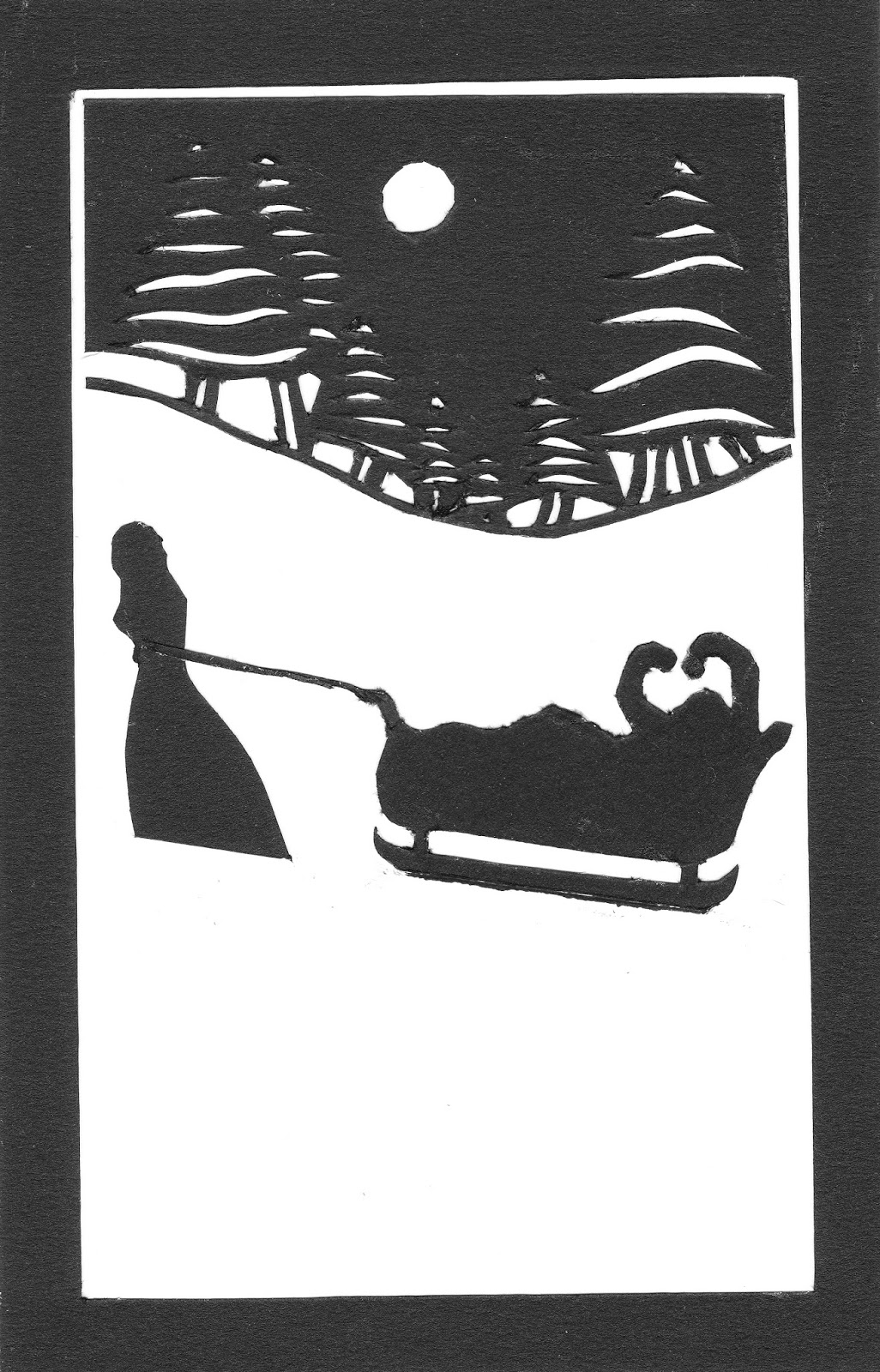
Time passes and still she could not bring herself to open her eyes. Then, she hears the sound of sleigh bells and she knows it is Trypthelda and his reindeer, Minska, pulling his sleigh full of furs and silks over the snow on his way to market. ‘Yes, Trypthelda is a kind man. I could love a man like him’ she thought. And she opened the door of the little cottage where she had been hiding away for a week and a day and she opened her eyes. But it was not Trypthelda that she saw, or Minska, his reindeer, for there before her, pulling the sleigh that he had stolen, was Orlon, the monstrous, hideous and mute hunchback. Of course, Selemia fell deeply in love with Orlon, for she could not see his repulsive face or his hunchback, she only saw the love of her heart and the love of her life. And she went to him and kissed his twisted face as he grunted with happiness. And she took his rough, bleeding hands and led him into the sleigh, covering him in furs and silks to keep him warm. And she pulled the sleigh herself, while Orlon lay fast asleep upon it. She pulled him everywhere, and although he could not speak, she knew that Orlon loved her more than any man, and could give her more love than anyone as vain as Per Baugd.

Over the snow, over the snow,
The Priestess and her sleigh would go.

Years passed and the Priestess and Orlon grew very old together. Yet still she pulled the sleigh. Eventually, poor sick Orlon died, but Selemia, never hearing him ever speak a word, never noticed. And still she pulled the sleigh.
Selemia’s beauty faded until it was only a memory and her fine dress had become thin and worn beneath the fur coat that she wore. Her beautiful long blonde hair was now grey and thin too, and all day she would speak to no one, except Orlon, the love of her heart and the love of her life, whom she pulled everywhere in the sleigh. But she did not know that under the furs and under the silks, heaped with snow, her Orlon was dead and dreaming of her now!
Well, when she discovered poor Orlon, her heart broke and she died too and she was found, still clutching at the hunchback’s bones, lying under the furs and under the silks that were heaped with snow, as much in love in death as she had been in love in life!’
‘What a sad story’ said Peg, ‘I thought it was going to have a happy ending?’
‘It was a happy ending’ Angelica said, ‘don’t you see? Per Baugd’s beautiful face disguised his hideous heart just as Orlon’s grotesque face disguised his beautiful heart. In the end it didn’t really matter. Selemia was beautiful and the hunchback was ugly, but when they became old, they both grew uglier anyway, except Selemia had further to grow in ugliness than him!’
‘But Orlon couldn’t have been very nice if he stole the sleigh!’ said Wot Not.
‘It’s not surprising when someone who has been treated like a monster that they should begin to act like one too!’ said Angelica.
‘Yes, but Selemia had to use magic didn’t she?’
‘And doesn’t that tell you something?’ Angelica said as she looked more and more like an angel. And Pegamina closed her eyes and thought about it for quite some time until she opened them and found herself sitting all alone. She called out ‘Wot Not!’ Angelica!’ but there was no answer. And she saw the broken wings upon the grass and held them. She knew that something was different and changed; she felt it in her heart!


Over the snow, over the snow,
The Priestess and her sleigh would go

PEGAMINA PART ONE


PEGAMINA
By BARRY VAN-ASTEN
 
PART ONE
 
PEGAMINA AND THE DANCING MERMAID

Pretty things were all she thought about, for they reminded her of her mother’s love. When she heard the birds singing, she heard her mother’s soft voice calling to her. When she smelt the pretty flowers growing in the meadow, she smelt the fresh morning fragrance of her mother. When she felt the warmth of the sun upon her face, she felt her mother’s kiss upon her cheek. And each morning as she buttoned up her dress, she would remember how her mother had once held four pearl-white buttons in her hand and said ‘now Pegamina, I will give you the sun and the stars and the world’ and she placed three of the buttons into Pegamina’s hand, saying ‘the fourth I shall keep for myself for it is the moon and one day, you shall have that too!’ And whenever Pegamina looked at the moon in the night sky, she would make a wish and cry for Pegamina missed her mother so much.
When she felt sad her father would say ‘your mother was so kind and gentle Peg that God wanted her to be an angel and although she is not here anymore, she will always be with us in our hearts’. But Pegamina did not understand why her mother could not be an angel and still be her mother.
Poor Pegamina, she was such an unhappy little girl and she found it so difficult to make friends, which made her feel so much alone. And so she lived in her own world of dreams where everything is beautiful and nothing can hurt you. But other children found her strange and called her cruel names until she would cry and want her mother to come and wrap her arms around her and say ‘mother will make it all better’, but she never came.
Sometimes she would sit in the garden, playing by herself and watching the small animals that crossed the lane into the field beyond, and she would whisper: ‘oh fox, I only want to be like other children’. But in her heart she knew that even the gentle creatures that she greeted, silently turned away from her, which hurt her just as much as the horrible names the other children would shout at her. But oh how Pegamina loved the animals.
Like most little girls she was very fond of horses, but Pegamina’s favourite animal in the whole world was the elephant. In fact, when she was small the only thing she would ever draw was elephants: baby elephants, dancing elephants and great tusked giant elephants. She even collected cuddly toy elephants and little elephant statues. But now, she could hardly look at an elephant without bursting into tears, for they reminded her of when her mother would take her into her arms when she felt sad and say ‘my little elephant, Peg?’ and she would begin to tell Pegamina her favourite story, always beginning with how she is a very special little girl, for you see ‘God made all the little animals and when he had finished he sat back and looked upon his creations with great pride. But there was one little elephant in the kingdom who wept day and night for he was such an unhappy elephant; he would go into the forest alone and look at his reflection in the river as the tears rolled down his face, falling into the water. And when God saw this he took pity on the sad little elephant and asked him why he was so sad, and the elephant replied:
‘You have given the nightingale its beautiful song; you have given the tiger its mighty roar; you have given the rhino its distinguishing horn, but what have I? You have given the stag its proud antlers and the leopard its spots and you have given the peacock its handsome tail, but what have I?’ And God looked upon the little elephant and said:
‘It is true that I have given each animal its special gift, and so to you will I give something special, for you see, I cannot have sadness in my kingdom’. And after a moment’s thought, the gift was given. But the little elephant felt no different and said so.
‘Look into the water!’ said God. And the elephant looked, and he saw, waving in front of his face, a huge trunk that he dipped into the water, as tears of happiness ran down it. And the sad little elephant was never sad again.
Pegamina never tired of hearing the story and would prompt her mother if she forgot the slightest detail, or ask for parts of it to be repeated, for she so loved the sound of her mother’s comforting voice. And after the story had been told, she always liked to wonder what it would be like being that little elephant, looking at the sky through its eyes and drinking from the river with its trunk, spraying the water into the air.
On other occasions her mother would sing to her. Most of all Pegamina liked the song about the scarecrow who wanted to see everything in the world, but because he had no legs, he couldn’t even move so much as a step, and so he had to dream what the world is like:
 
‘My back is an old wooden pole,
My chest is a bundle of straw;
Here I stand between pastures that roll,
Yet my dreams show me so much more...
 
I want to see how children play
But my eyes are black and worn.
I want to rise from this forest of hay
Where I fight with my days in the corn!
 
I want to see rivers that endlessly flow
Towards some distant shore;
I want to be free for I have to know
Why crows don’t scare, no more!
 
I want to see flowers and blossoms and blooms
And smell more than harvested hay;
To talk about art in elegant rooms
And not stumble with which words to say!
 
I want to see so much more than I do,
Where nature’s dreams collide...
To trample my limbs in the luminous dew
Where angel eyes have cried!
 
My back is an old wooden pole,
My chest is a bundle of straw;
No heart in my breast nor no soul
Can give me these things I wish for!’

But most of all Pegamina liked to hear the story about the broken-hearted mermaid who had only one desire in life and that was to dance like a ballerina. But how can a mermaid dance when there is a tail where legs should be?
One moonlit night, as the mermaid sat singing some sad and beautiful tune beside a rock, the wind began to blow around her and through her long golden hair as it whispered into her small sea-shell-like ear: ‘why are you singing such a sad song when you are so beautiful that even the moon is envious of your beauty?’ And the mermaid replied: ‘I am sad, for I am tired of the sea and all it contains, my only true desire is to dance and be a ballerina, admire by all who come and see me’. And the wind said ‘beautiful mermaid, you are what you are, can’t you be happy with that?’ And the tearful mermaid replied, ‘I have tried all my life to be content with the sea, but I don’t like who I am or what I have become!’ ‘Then I shall give you all that you desire!’ the wind said, ‘but you must promise never to return to the sea, for I would not see your beauty altered, and in granting your wish, a star must die! Tell me, do you still wish?’
‘I wish!’ said the mermaid. And the air grew still and the sea grew calm as she trembled and swam slowly towards the shore. And then, from the foam she rose on the most beautiful legs you could ever imagine and all she could do was admire them in the moonlight. Then suddenly, she took a step, and then another, until eventually she was twirling, first this way, then that way, upon her toes. And then she stood upon one leg with her arms in the air, bringing her perfectly arched leg down to rest beside the other, as she made the most beautiful movements across the sand; more beautiful than the waves had ever been, or the dolphins under the sea. And she danced until she was gone, far from the sea and happier than she had ever been before, and only a little sad for the death of a star. And Pegamina would often think about the mermaid and wonder if she would ever stop dancing.


The Dancing Mermaid

A BEAR IN THE ORCHARD

A BEAR IN THE ORCHARD
By BARRY VAN-ASTEN


Marcel Delvaux was of French descent, a member of a long and noble aristocratic family whose eminent line it is said had links back to Mary Antoinette and to the court of the Sun King, yet it had dishevelled. The family tree, like an old rose bush in a genteel landscape, had been pruned as members who aspired too high were lopped off; sometimes roots crept into pastures where they should not creep, these unfortunate bastards were blessed with the blood of nobility but are not crowned with the glory to bear the name. Of Marcel’s blood we can be sure but of his heritage we must resist the desire to splinter him into the Royal box for the Revolution ended any pretensions to any throne!
Marcel was considered quite handsome in a European sort of way with his dark hair and sun-worn complexion; he was athletically built and tall of stature with dark eyes. He was always dressed impeccably and possessed a fine and extensive wardrobe.
Marcel’s father Raymonde Delvaux had made his fortune in the wine industry, exporting to colder climates that were less fortunate to deserve the golden rays of the sun. Marcel’s mother Jean Delvaux nee L’Orette, had died during Marcel’s infancy and his memories of her were scarce but he always remembered her to be smiling and smelling of roses wearing long loose flowing dresses and floppy hats. She was taken away to walk beside the good Lord as an angel, Marcel was told, but in actual fact she died of heart failure while out riding and the good Lord had no hand in requesting her services and appointing her as yet another angel in a work place with already an over-abundance of the things! As a child at the family chateaux Marcel would want for nothing: ponies were paraded around the gardens and Marcel would ride out to the vineyard to watch the pickers; his father had even bought Marcel a pet bear which he named Mephistopheles and it was chained to a post and tormented by the young boy until it broke free and escaped and was shot dead near the outskirts of the village by all accounts. In fact, life at the chateaux was nothing short of the last days of ancient Rome with an abundance of wealth that spilt into every aspect of Marcel’s life. During his formative years Marcel was privately educated at the chateaux by an English school mistress named Katrina Holt, a very stern and overbearing lady of mature years with the remains of a face that was once possibly extremely beautiful. The elegant Miss Holt taught Marcel an eclectic timetable of subjects from art, Latin, English, history, geography and all the other nasty little lessons that wasted the golden hours of the day, but of course, Marcel was a model student and excelled in chemistry and mathematics for which he showed great aptitude.
Marcel’s younger brother Andre whose speech was like rifle shots never got on with Marcel and as soon as age permitted he was away from the family and the confines of the chateaux. He became involved with some unsavoury characters and got into some enormous debts; he was caught misdirecting funds from the company he was working for and accordingly did the decent thing and hung himself, leaving his widow and young daughter with what little dignity an honourable death can afford.
Marcel became intrigued with Catholicism and spoke with great enthusiasm about converting to the faith to his cousin Baptiste Dubois who was staunchly of the Catholic persuasion. Baptiste, who resented Marcel’s family wealth informed his younger cousin about all the magnificent benefits of becoming a Catholic and some lesser known facts about the church, for example, that within the bowels of the Vatican reside six cannibal cardinals who are fed with the flesh of Protestant virgins, and that the splendidly hirsute and syphilitic Pope Leo XII lived a somewhat secluded existence and was a confirmed lycanthrope, thus he was kept on a leash blessed by his predecessor at the time of the full moon. Then of course there was the mad Pope Paul II in the fifteenth Century who was still alive to this day, kept alive by the blood of Christ that miraculously bleeds from a Holy relic kept locked away in the Vatican. Then of course there are the Pope’s handmaidens, a select group of eunuch priests kept in a special room where their only purpose in life is to disprove the theory of life after death by eating and sleeping and bathing with the recently departed. Baptiste wished to shock poor Marcel out of his interest for the Catholic Church but all he did was create more wonder and enthusiasm in the young devotee. ‘And what else do these elect heirs of god do?’ asked Marcel.
Baptiste went on to relate all the sordid behaviour from such luminaries as the sodomitic Pope Julius II, the incestuous Pope John XII, the deplorable and unspeakable Pope Benedict IX who kept a bear as his lover and the sodomitic Pope IV.
‘Sodomy seems to be very popular within the Church!’
‘I should say, in fact its compulsory!’ declared Baptiste.
A week later, Marcel went to see Father Chevalier Lecomte and expressed his intention to become Catholic. The kindly old Father was pleased and asked him why he wished to be confirmed. Marcel told him that he wished to see the six cannibal cardinals and help with the importation of Protestant virgins and to assist the handmaidens in their disproval of the existence of the spirit after death; and to see the miracle of Pope Paul II and besides, he was almost sure that he was a sodomite and that a day or two with the Pope would confirm him in this. The astonished Father Lecomte turned pale then red then choked on his rosary which he had been stuffing into his mouth subconsciously. Of course when Marcel learnt that there were no cannibals in the Vatican and neither were there any handmaidens it was like the Romans hammering in Christ’s nails all over again and as you would expect Marcel lost all interest in Roman Catholicism.
Marcel grew up and took over the family wine business after his father died and lived the life of a rich bachelor. It was said that he wore hand-stitched shoes from Italy and that his made to measure suits, which by the way he only wore once, were sent first class around the world to give them an ‘air of travel’.
It was during the great festival of Bacchus that Marcel met a young woman by the name of Marie Fournier, an artist who was very proficient with water colours. Marie was intrinsically pure and honest, a deep thinker but she was always trying to catch him out for she had such a suspicious nature due to being hurt by men in the past. They would argue and she would accuse him of deception and he would say she was always looking for the ugliness in life while he was always searching for beauty!
Marie was deeply intellectual, almost frighteningly so but she pretended to be otherwise for she felt that a man should not feel too intimidated, but of course most men were, but not Marcel and it was this that brought her closer to him. She had a cruel mouth which was not very expressive and weary eyes as if they had looked into the pit of hell and digested all that is horrible and filthy, like some creature of the night, pale and voluptuous. She feared intimacy yet secretly craved it; she drew him close only to push him away again. The act of lovemaking between them was like the ultimate sacrifice; a satisfaction in the others destruction! A blind fury of sexual congress and it was over, just like the act of eating was an explosion on the taste buds and then it was over! She made him feel like that awful Pope Benedict IX, making love to her as if she were some wild yet unfeeling bear!
An abstract force held by his tenderness and her unyielding refusal to let him get close to her, to look upon her and touch her soft skin passionately for she was always digging, bloody digging for deception! The alchemist observing the chemical reaction in him, calculating every movement, gesture and every word for the Philosopher’s Stone – Lies!
He knew all this, he understood her suspicions and her jealousy and he matched her tooth for tooth in the action and re-action stakes, but he did not account for a third party, throwing a substantial brick at the serene glass-house they were building together.
This third party in this un-holy trinity was a crazed and equally obsessive young woman named Monique Verdier who was the complete opposite of Marie, unrefined and not very intelligent for she sought filth and only filth. She had come into Marcel’s world through their common interest in the occult and he thought his great stature would have some lasting effect upon Monique in the form of curing her escalating alcoholism. Monique was in the early stages of being in love with Marcel who in turn had nothing but good intentions and friendship to offer in return for he was in love with Marie. Monique, realising that any relationship was hopeless resorted to the brutality of the so-called ‘fairer sex’ and spoilt any chance for poor Marcel by concocting a web of lies about him and evoking Beelzebub himself to enter the arena and turn all his attention upon poor Marcel who was of course the innocent party. Marcel was indifferent to most things but some harmless off the cuff remark had been sharpened like a dagger, tempered with untruth and turned upon him, thrust into his back, his heart and cutting his throat for good measure! Lies!
Against such insurmountable and overwhelming odds Marcel did not wish to degrade himself further and so he retired from the battle gracefully – tant pis! But Marie and Marcel had reached some sort of understanding where by she would continue to try and manipulate him into revealing himself as some sort of dishonest and devilish creature and expose him while he basks in the glow of her superior magnificence – Lies!
This could not go on! The bitter regrets and the ending of their relationship were meant to be, it was part of Marcel’s education and Marie’s acceptance of herself for she seemed much older in soul years than Marcel; it was their history and development and nothing could change the laws of nature, Marcel would have gladly let her trample upon his cold corpse that her feet should not disturb the grass; that he would bear her name upon his heart to the grave and beyond, whatever did lay beyond! Nevertheless, the fact was established: Marcel knew that he would never see her again and he also knew that he would probably love Marie until the day he died!
In time the palettes of the poor imbeciles who drank Chateaux Delvaux became more adventurous and sought something more worthy of their standing. Marcel, with no business sense or any financial understanding drove the family vineyard into the ground till it was no more. Marcel became bankrupt and upon investigation at the Chateaux the body of a young girl was found strangled in the cellars. Any more than this could and would not be spoken of for Marcel was accused of deeds so disturbing that there is no need to put such foul extremes of human behaviour into print! There was lots of talk about hideous depravity and things so unspeakable which could not be mentioned among the villagers but of Marcel there was no word for he had gone missing for over a week and the authorities were searching for him. The police spoke to Marcel’s tutor Miss Holt who had taken up a position at a nearby residence for young girls. Miss Holt spoke glowingly as to Marcel’s character and that any speculation to the abominable acts at the chateaux was not to be heeded as all forms of vulgarity were foreign and detestable to Marcel, she claimed. It seemed that the whole village had something or other to say about Marcel, those of his enemies, for they were numerous said that Marcel had gotten mixed up in the occult arts and that he was communicating with the dead and conversing with infernal spirits. In fact, this was not too far away from the truth as Marcel had indeed ‘experimented’ with ceremonial magic, namely the Grimorium Verum!
Now, Marcel was not capable of perpetrating such acts, I could find fifty or a hundred people to stand trial and confirm his integrity, honesty and general demeanour; I could summon figures from this world and the next to declare he was not a child-killer; his sister-in-law Suzanne said he was not a child-killer; his niece Ermelde said he was not a child-killer; the gardener Andre said he was not a child-killer; the local newspaper said he was not a child-killer and the Mayor said he was not a child-killer and even the local priest stepped out of his walled retreat and tore himself away from Henri the houseboy to say that Marcel was not a child-killer! Yes, God and the world knew Marcel was not a child-killer yet where was Marcel and why did he not stay to prove his innocence?
It was several years after Marcel left France and Chateau Delvaux had become a cursed place much avoided by the locals; following the discovery of three more children near the vicinity of the chateaux that the perpetrator of those horrific crimes who was brought to justice, a one Dr. Louis Marchand who had considerable access to the Chateaux and the surrounding villages for he was the physician to the murdered children; in fact, many body parts were found at the doctor’s apartment and what his intentions were was anyone’s guess. But of course, poor Marcel was unaware of such matters and remained in hiding.
Some years later in a London suburb a young family were hosting a garden party at their sumptuous home leaving the children to play in the orchard. Geoffrey Anstruther and his wife Elizabeth were part of the ‘live now pay later’ generation and they were sitting in their garden near the ornamental pond when they suddenly heard shouts from the direction of the orchard. The two children, Sylvia and Bradley came pounding into the group of adults shouting that they had killed the giant bear in the orchard. There was laughter and there were gasps and eventually Geoffrey agreed to follow the children and see the corpse of the great bear they had slain.
The children had been playing in the long grass meadow of the orchard when a large, dark figure had descended upon them with its arms raised in the air. The children were startled and Bradley threw a rock at the monster hitting its head. With a deep groan the bear fell down as the children ran away. When Mr Anstruther and the children returned to the bloody death scene Mr Anstruther, realising the awful atrocity that had occurred swiftly hurried the children away to fetch Mrs Anstruther. Geoffrey saw the figure of a man, a very dirty man with long finger nails, unkempt hair and beard wearing an oversized furry astrakhan coat. The only thing about the unfortunate devil which was not filthy was the whites of his eyes, and even they seemed a dull yellow peppered with red streaks. The identity of the man was never known because upon Mrs Anstruther’s arrival Mr Anstruther had already begun digging a hole but had they looked a little closer at the body, in fact at the signet ring he wore they would have noticed the Delvaux crest and a search of the dead man’s pockets would have yielded a faded letter from some woman named Marie, and had he looked but further still, into the heart of the fallen warrior, there in the orchard, again the name ‘Marie’ would come to light for it had been the only saving grace of poor Marcel, his only ever adventure into the existence of pure love which if not for the heavy hand of guidance from some inhuman being, may have flourished. But Mr Anstruther buried the poor wretch in the orchard where he fell and in explanation to the children and the guests he merely stated that the children had found a ferocious yet wounded badger which had to be mercifully put out of its misery. As the years and the seasons passed flowers grew and leaves fell and snow carpeted the shallow grave in the orchard and the event was just a long distant memory to the children who were now adults and married with families of their own. Yes it was all just a game a long time ago and no more was ever said about the bear in the orchard!

Thursday, 12 November 2015

Walking the Cleveland Way

Images from the Cleveland Way national trail in the North Yorkshire Moors


DAY ONE


The beginning of the 109 mile Cleveland Way at Helmsley


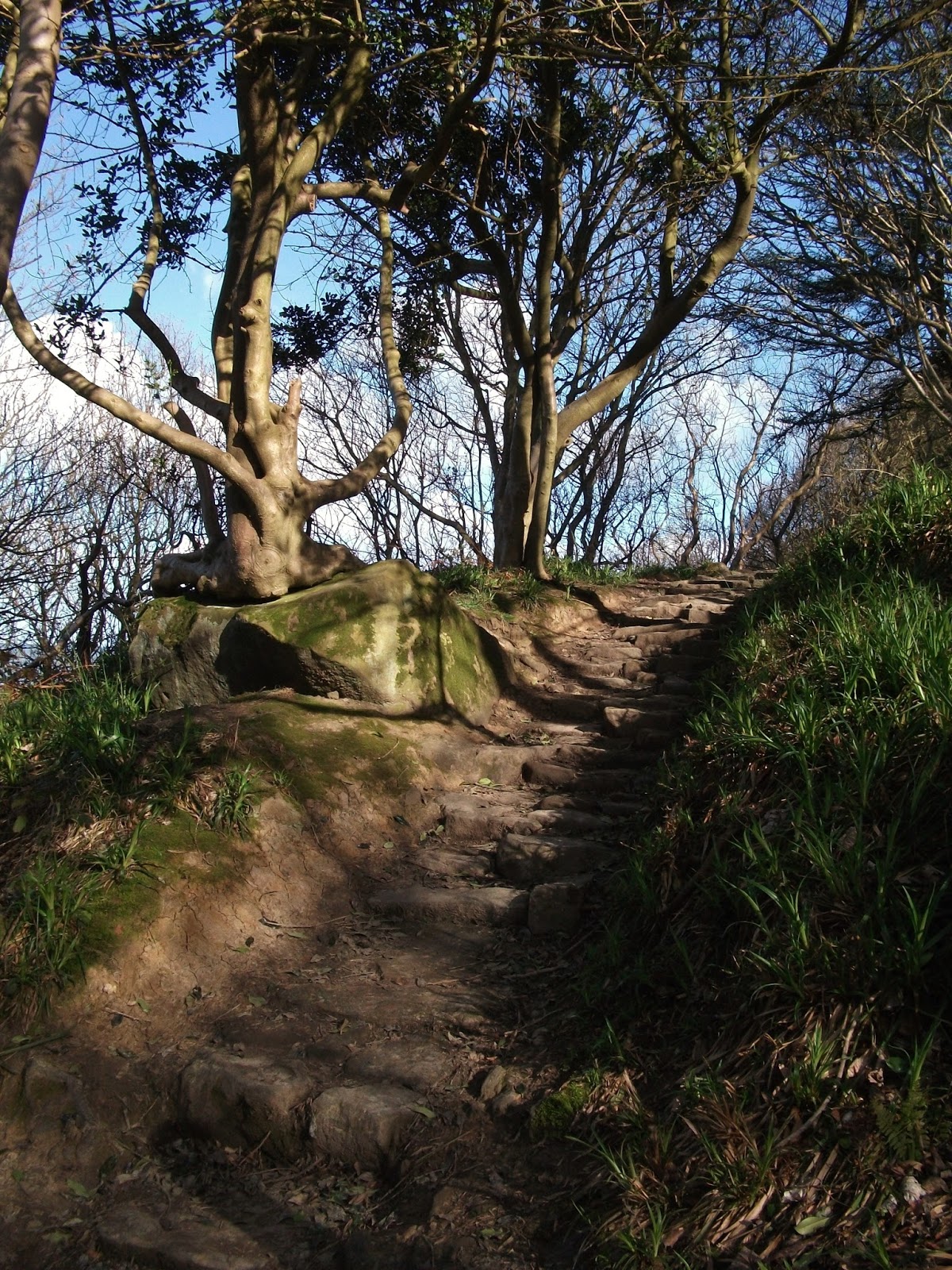
The route undulates through sections of woodland


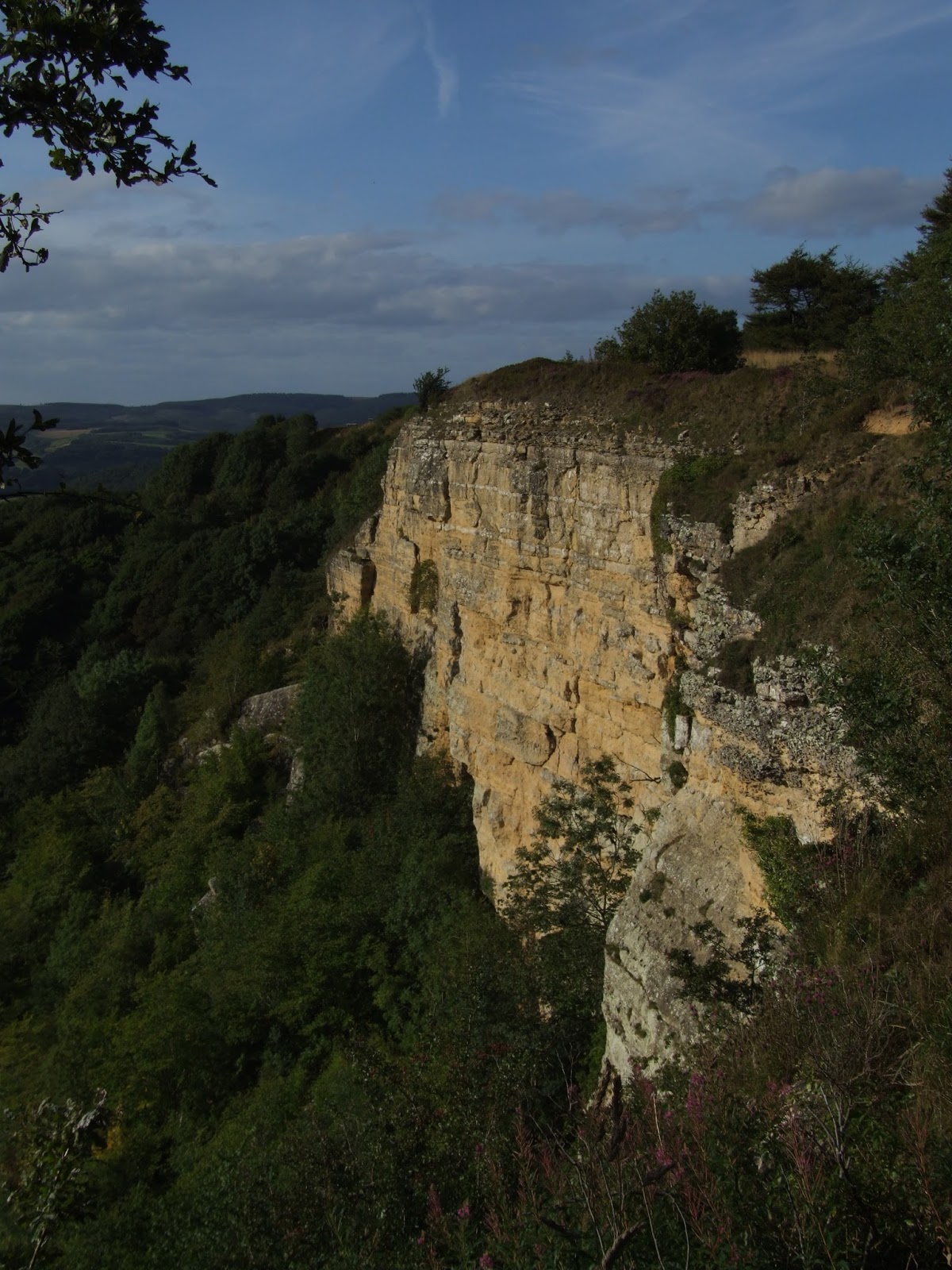
Stunning rock formations!


Rievaulx Bridge (18th Cent.) crossing the River Rye


A short detour from the trail gives you the sight of the remains
of the 12th Century Cistercian Rievaulx Abbey


One of the artificial lakes at Nettle Dale


The woods beckon!


Towards Sutton Bank


The first sight of heather!


Looking back towards Roulston Scar


Welcome shade towards Sutton Bank


Sutton Brow escarpment above the mysterious Gormire
Lake rumoured to be bottomless where a village lies
drowned beneath!


Sutton Brow


The trail ahead towards the Hambleton Down


The Drove Road after the Boltby Scar at High Barn towards Sneck Yate


Looking back towards High Barn


A moment to pause before sunset!


The end of the first day of walking at High Paradise Farm, Boltby
where we pitched camp in a small copse!


The Library at High Paradise Farm
 
 
DAY TWO
 
 
Looking back to High Paradise Farm


Fields from the Hambleton Road


View of the Moor from the Drovers' Road


Onwards through Little Moor!


One of the many boundary markers along the route


Trees near Thimbleby Moor


Another marker stone


After the footbridge over Jenny Brewster's Beck


The Beck before Oak Dale Reservoir. The second day's walk ended
at Osmotherly where we camped for the night at Cote Ghyll
 
 
DAY THREE
 
 
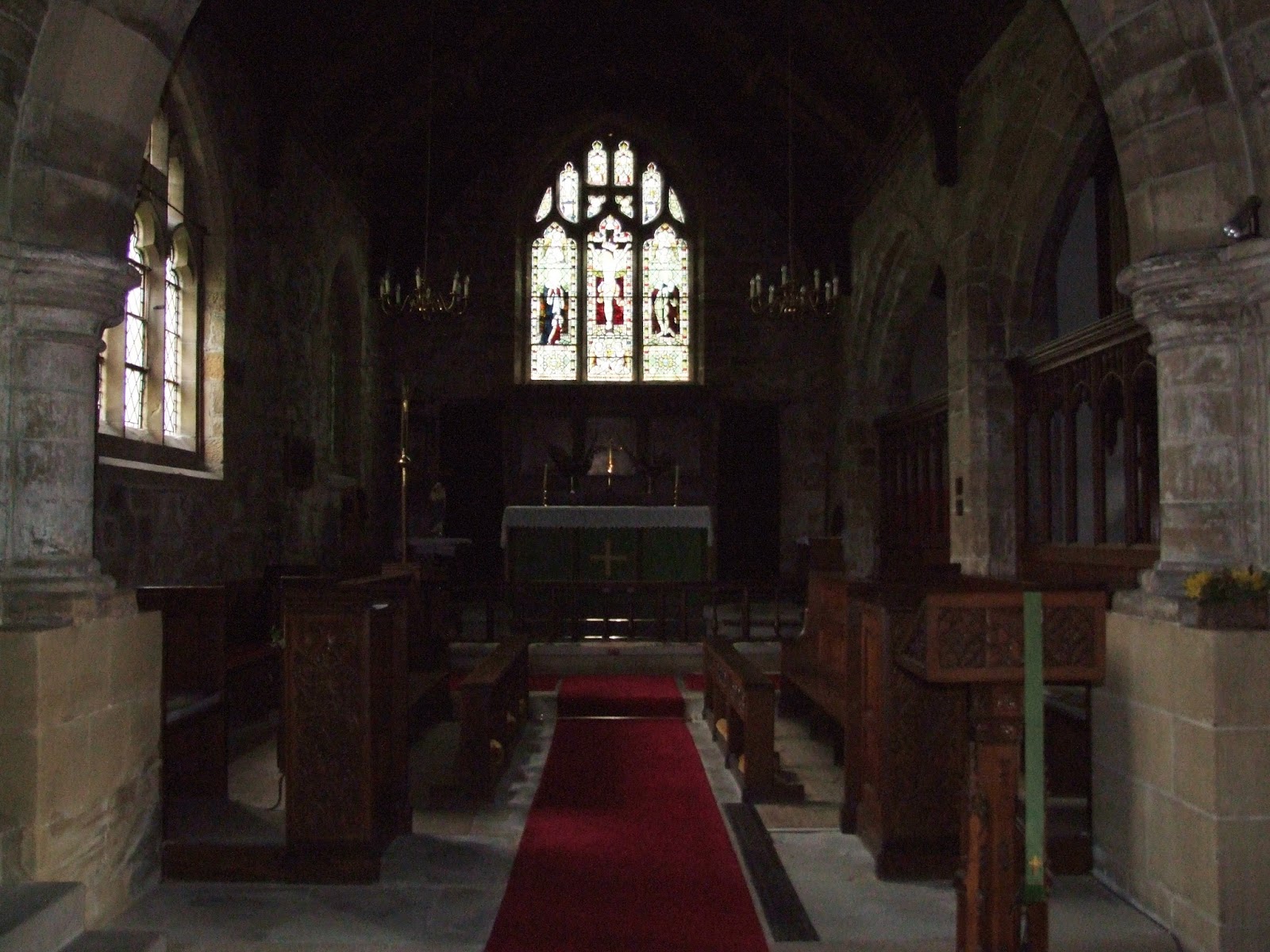
St Peter's Church, Osmotherley


A fine interior too!


After a short detour to visit the Lady Chapel we had a delightful
day among the heather!


Towards Scarth Nick


Footbridge crossing Piper Beck


The trail towards Round Hill


The Carlton Moor Ordnance Survey triangulation pillar at 1,338 feet


We pitched camp at Lord Stones, Chopgate and here day three ended!


But not before visiting the nearby mysterious Lord Stones!


A magical place!


And a beautiful sunset to end the day!
 
 
DAY FOUR
 
 
Following a clear night where we watched the stars the next day
saw low cloud cover and everything seemed wet, a perfect
opportunity to view the Lord Stones once more!


Like silent sentinels!


Detail of symbol on the Lord Stone


The trail continues from Cringle Moor towards Urra Moor


Nothing but grouse and sheep for company!


At the Wainstones!


Clay Bank
 
 
A reminder of the harshness of the Moors!


On through Urra Moor and Greenhow Moor to Bloworth Crossing!


At the point of exhaustion! Tall boundary stone
'Sir W. Fowels' 8th Baronet of the Ingleby Estate
who died 1845 and smaller 'Jenny Bradley' stone


On over Ingleby Moor and Battersby Moor and Warren Moor
towards Kildale and Park Farm where we stayed in the Byre!


A touch of luxury in the form of electricity! A very comfortable
night was spent here where we were able to dry the tent out!
 
 
DAY FIVE
 
 
Following the walk from Kildale climbing through the
woods suddenly the Captain Cook monument appears


Looking up the 60 foot Cook Monument which has
been like a visible beacon on the horizon for two days!


Roseberry Topping viewed from Newton Moor


Black Nab


Railway Viaduct towards Saltburn-by-the-Sea


The Railway Viaduct


Green Man bench in the Valley Gardens at he end of the day's
walk finishing in Saltburn
 
 
DAY FIVE


Wooden carving of a fisherman at Skinningrove
 
 
Skinningrove seemed to be a rather uninteresting place but fortunately the route continued along the Hummersea Scar and Bank, past Boulby and on to Cowbar and Staithes with its little harbour.


DAY SIX
 
 
The mysterious 'Hob Holes' at Runswick Bay


Runswick Bay


Detail of rock formation at Runswick Bay


Tunnel exit from the disused railway towards Sandsend


The whale jaw bones at Whitby with the Abbey
 in the background


The captain Cook memorial at West Cliff, Whitby


Captain Cook


Whitby harbour and the Abbey from West Cliff


Steam train at Whitby station
 
 
DAY SEVEN
 
 
The famous 199 steps at Whitby!


The Black Horse at Whitby


The exceedingly haunted White Horse and Griffin
at Whitby


Whitby Abbey


The Abbey


The Fog Signal Station just outside Whitby


The Lighthouse


Lighthouse from above


The Cleveland Way coastal walk continues!


Towards Robin Hood's Bay


Robin Hood's Bay
 
 
DAY EIGHT


 The charming Robin Hood's Bay


 The walk towards Ravenscar


We encountered this slow worm along the way


A precarious pill box!


A magical bog towards the Ravenscar Visitor Centre
where we stop for refreshments!


This snake in the grass was the second of two adders we saw!


The delightful Hayburn Wyke


Onwards through stunning scenery!


Just three miles to Scarborough!


With Scalby in sight! This sign post indicates the
circular 48 mile route back to Helmsley


DAY NINE


The beautiful Peasholm Park at Scalby!
Just a short walk today from Scalby to Cayton Bay


DAY TEN


Cayton Bay looking back to Knipe Point


The view back towards Cayton Bay from
Gristhorpe Cliff


The view ahead towards Filey


The end of the Cleveland Way at Filey!